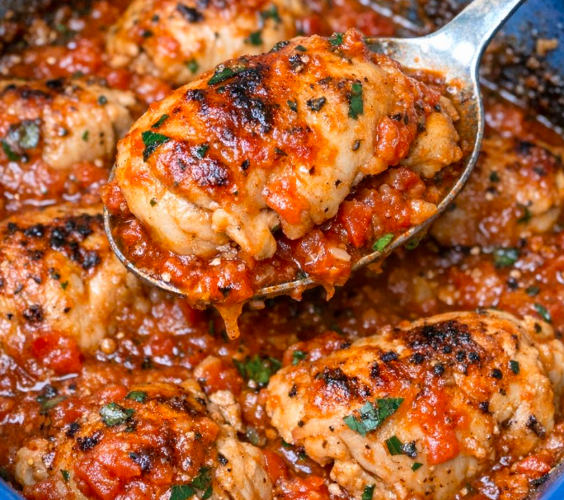
The flavors lean toward a homespun version of chicken Provençal: tender pieces of chicken nestled in a bright, herby tomato sauce that caramelizes at the edges. It’s the sort of recipe that fits right into a Midwestern kitchen—humble pantry staples, a trusty casserole dish, and a meal that brings folks back for seconds and the recipe card.
This chicken is saucy and comforting, so it’s wonderful spooned over buttered egg noodles, mashed potatoes, or simple white rice to catch every bit of the herbed tomato juices. A side of green beans, steamed broccoli, or a crisp lettuce salad with a tangy vinaigrette balances the richness nicely. Warm dinner rolls or a crusty loaf of bread are handy for mopping up the browned, jammy tomato sauce in the bottom of the dish. If you like a little extra color, tuck a few lemon wedges or fresh parsley on the platter just before serving.
You can nudge this three-ingredient recipe in several directions while keeping its spirit (and ease) intact.
For a slightly richer dish, stir 1 to 2 tablespoons of heavy cream or a spoonful of butter into the sauce right when it comes out of the oven, letting it melt in before serving. If your jarred herbed tomato sauce is on the plain side, you can tuck in a few sprigs of fresh thyme or rosemary before baking, or add a pinch of dried Italian seasoning to the sauce—these are optional and don’t change the basic three-ingredient nature of the recipe.
If you prefer white meat, you can use bone-in, skin-on chicken breasts; just be careful not to overbake them, checking for doneness around 25 minutes after uncovering. Boneless, skinless thighs also work, though they won’t brown quite as much; reduce the total baking time slightly and begin checking for doneness earlier. For a heartier one-pan meal, scatter a few thick slices of onion or wedges of bell pepper under or around the chicken, understanding that these are extras beyond the original three ingredients.
Food safety tips: Always thaw chicken fully in the refrigerator, not on the counter. Keep raw chicken and its juices away from ready-to-eat foods and use a separate cutting board if possible. Wash your hands, knives, and cutting surfaces thoroughly with hot, soapy water after handling raw poultry. Bake until the thickest part of the chicken reaches at least 165°F (74°C); using an instant-read thermometer is the most reliable way to check. Refrigerate leftovers within 2 hours of cooking, storing them in a shallow, covered container. Reheat leftovers to at least 165°F before serving, and use refrigerated leftovers within 3 to 4 days.