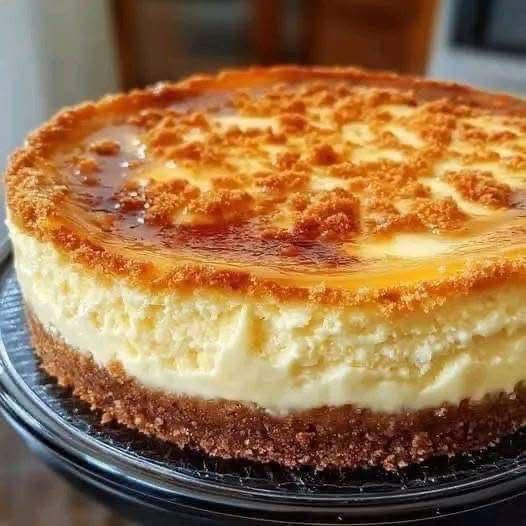
Crème Brûlée Cheesecake
Of course! The Crème Brûlée Cheesecake is a masterpiece of dessert fusion, combining the creamy, tangy richness of a classic New York cheesecake with the signature crackly, caramelized sugar top of a crème brûlée.
It’s a showstopper that’s surprisingly achievable. Here is a comprehensive guide, including a detailed recipe, tips for success, and answers to common questions.
The Ultimate Crème Brûlée Cheesecake Recipe
This recipe uses a water bath (bain-marie) to ensure the cheesecake bakes evenly without cracking, resulting in an incredibly silky texture.
Yields: One 9-inch cheesecake (12-16 servings)
Prep time: 30 minutes
Bake time: 1 hour 30 minutes, plus several hours of cooling/chilling
Ingredients
For the Crust:
· 1 ½ cups (150g) graham cracker crumbs
· 2 tablespoons (25g) granulated sugar
· 6 tablespoons (85g) unsalted butter, melted
· A pinch of salt
For the Cheesecake Filling:
· 4 (8-ounce) blocks full-fat cream cheese, softened to room temperature (904g total)
· 1 ¼ cups (250g) granulated sugar
· 1 cup (240ml) full-fat sour cream, at room temperature
· 4 large eggs, at room temperature
· 2 teaspoons pure vanilla extract
· ¼ cup (30g) all-purpose flour
· ½ teaspoon salt
For the Crème Brûlée Topping:
· ½ – ¾ cup (100-150g) superfine or granulated sugar (see pro-tip below)
Instructions
Part 1: The Crust
- Preheat your oven to 350°F (175°C). Grease a 9-inch springform pan and wrap the outside tightly with two layers of heavy-duty aluminum foil to prevent water from the bath seeping in.
- In a medium bowl, mix the graham cracker crumbs, 2 tablespoons of sugar, and a pinch of salt. Stir in the melted butter until the mixture resembles wet sand.
- Press the mixture firmly and evenly into the bottom of the prepared springform pan. Use the flat bottom of a glass or measuring cup to compact it.
- Bake for 10 minutes. Remove and let it cool on a wire rack. Reduce the oven temperature to 325°F (160°C).
Part 2: The Cheesecake Filling & Water Bath
- In a large bowl, using a hand mixer or stand mixer with a paddle attachment, beat the softened cream cheese on medium-low speed until it is completely smooth and creamy, about 2-3 minutes. Scrape down the bowl frequently.
- Gradually add the 1 ¼ cups of sugar and beat until fully incorporated.
- Beat in the sour cream and vanilla extract.
- Add the eggs one at a time, beating on low speed just until the yolk disappears after each addition. Do not overmix after adding the eggs, as this incorporates too much air and can cause cracking.
- Gently fold in the flour and salt until just combined.
- Pour the filling over the cooled crust.
- Place the foil-wrapped springform pan into a large roasting pan. Place the roasting pan in the preheated oven and carefully pour hot water into the roasting pan until it comes about halfway up the sides of the springform pan.
- Bake for 1 hour and 15 minutes to 1 hour and 30 minutes. The edges will be set, but the center will still have a slight jiggle (like Jell-O) when you gently shake the pan. This is perfect.
- Turn off the oven, crack the oven door open with a wooden spoon, and let the cheesecake cool in the oven for 1 hour. This gradual cooling is key to preventing cracks.
- Remove the cheesecake from the water bath and place it on a wire rack to cool completely to room temperature. Then, cover and refrigerate for at least 8 hours, preferably overnight.
Part 3: The Crème Brûlée Topping & Caramelization
- The Day of Serving: Remove the chilled cheesecake from the springform pan and place it on a serving plate.
- Evenly sprinkle the superfine sugar over the entire top of the cheesecake. Gently tilt and tap the plate to distribute the sugar into a thin, even layer. For a professional look, you can use a small sifter to dust the sugar on.
- Using a Kitchen Torch: Hold the torch 4-6 inches away from the surface and move it in slow, steady circles. Caramelize the sugar until it is melted and has a deep amber color. You’ll hear it crackle! Let it sit for 2-3 minutes to harden.
- Using a Broiler (Alternative Method): Place the sugared cheesecake on a baking sheet. Set your oven broiler to high. Watch it very carefully—it can burn in seconds. Broil for 1-4 minutes, rotating the pan as needed, until the sugar is bubbly and caramelized.
- Serve immediately! The sugar topping will stay crisp for about 30-60 minutes before it starts to soften from the moisture of the cheesecake. Slice with a sharp knife that has been run under hot water and wiped dry.
Key Tips for Success (The “Secrets”)
· Room Temperature is Non-Negotiable: Cold cream cheese will result in a lumpy batter. Cold eggs and sour cream can cause the batter to break. Plan ahead!
· Don’t Overmix: Over-beating, especially after adding the eggs, incorporates too much air and can make the cheesecake puff up and then fall, causing cracks.
· The Water Bath is Your Best Friend: It creates a steamy environment that cooks the cheesecake gently and evenly, preventing a rubbery texture and a cracked top.
· Chill Thoroughly: A cheesecake that hasn’t set fully in the fridge will be impossible to slice cleanly and may weep moisture, dissolving your brûlée topping.
· Sugar for Topping: Superfine sugar (caster sugar) is highly recommended. Its finer crystals melt and caramelize more evenly and quickly than standard granulated sugar.
Flavor Variations
· Vanilla Bean: Scrape the seeds from one vanilla bean pod into the filling for an intense, aromatic flavor.
· Citrus: Add 1-2 teaspoons of finely grated lemon, orange, or lime zest to the filling.
· Espresso: Dissolve 1-2 tablespoons of instant espresso powder into the vanilla extract before adding it.
· Chocolate: Melt 8 ounces of semi-sweet or bittersweet chocolate, let it cool slightly, and fold it into the finished batter.
FAQ
Q: Can I make this ahead of time?
A: Absolutely! You can bake and chill the cheesecake (without the sugar topping) up to 3 days in advance. Apply the sugar and caramelize it the day you plan to serve it.
Q: My sugar topping is getting soft. What can I do?
A: The moisture from the cheesecake will eventually dissolve the hard sugar shell. This is inevitable. The best strategy is to caramelize the sugar right before serving. If it softens on leftovers, you can re-torch individual slices.
Q: I don’t have a kitchen torch. Is the broiler method okay?
A: It works, but it’s riskier. The broiler heats the entire cheesecake, which can be problematic. The torch allows for precise, localized heat and is the preferred tool for the job.
Q: Why is my cheesecake cracked?
A: The most common causes are overmixing, rapid temperature changes, or overbaking. Don’t worry! The cracked top will be covered by the beautiful brûlée sugar, so it will still look and taste amazing.