Introduction
Imagine a prime rib roast so tender it practically melts in your mouth, bursting with savory flavors, and boasting a perfect medium-rare center. Now, imagine achieving all of this with minimal fuss, thanks to the magic of your slow cooker. Forget the stress of oven timings and constant monitoring; this Slow Cooker Prime Rib Roast recipe is designed to make one of the most impressive cuts of beef utterly effortless. It’s the ultimate solution for anyone who craves that luxurious, restaurant-quality prime rib experience without the high-pressure cooking techniques
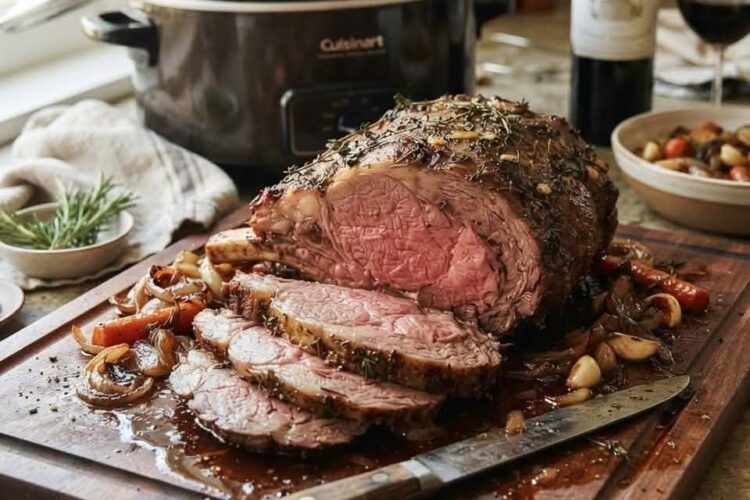
This isn’t just a meal; it’s a statement. Perfect for holiday gatherings, special anniversaries, or even just a decadent weekend dinner, this slow cooker method transforms a potentially intimidating dish into a triumphant culinary success. We’re talking about a beautifully seared crust, infused with aromatic herbs like rosemary and thyme, complemented by tender, caramelized vegetables that cook right alongside the beef. The result is a juicy, flavorful roast that will have everyone reaching for seconds, all while you enjoy the company, knowing your Cuisinart slow cooker is doing all the hard work.
Get ready to discover the secret to the most tender, juicy, and perfectly cooked prime rib you’ve ever made at home. With our detailed guide, you’ll learn how to select the best cut, season it to perfection, and leverage the slow cooker for consistent, mouthwatering results every single time. We’ll cover everything from an optional searing step for that irresistible crust to the crucial resting period that locks in all those delectable juices. Prepare to impress your taste buds and your guests with this incredibly easy, yet unbelievably delicious, Slow Cooker Prime Rib Roast.
Nutritional Information
Per serving (approximate values):
- Calories: 750
- Protein: 60g
- Carbohydrates: 15g
- Fat: 50g
- Fiber: 3g
- Sodium: 650mg
Ingredients
- 4-5 lb bone-in or boneless prime rib roast, well-marbled
- 2 tablespoons olive oil
- 2 teaspoons coarse sea salt
- 1 teaspoon freshly ground black pepper
- 2 tablespoons chopped fresh rosemary
- 1 tablespoon chopped fresh thyme
- 6-8 cloves garlic, peeled and smashed (or left whole)
- 1 large yellow onion, roughly chopped into large pieces
- 3-4 medium carrots, peeled and cut into 2-inch chunks
- 1 cup beef broth (low sodium recommended)
- 1/2 cup dry red wine (optional, enhances flavor)
- 1 tablespoon Dijon mustard (optional, for rub)
- For serving: fresh parsley (chopped), additional fresh rosemary sprigs
- For gravy (optional): 2 tablespoons unsalted butter, 2 tablespoons all-purpose flour
Instructions
- Prepare the Prime Rib: Remove the prime rib roast from its packaging and pat it thoroughly dry with paper towels. This step is crucial for achieving a good sear. Let it sit at room temperature for at least 30-60 minutes before cooking.
- Season the Roast: In a small bowl, combine the coarse sea salt, black pepper, chopped fresh rosemary, and chopped fresh thyme. If using, you can also mix in the Dijon mustard with the olive oil for a flavorful paste. Rub the entire surface of the prime rib generously with the olive oil (or mustard-oil mixture), then evenly coat it with the herb and spice mixture, pressing it gently to adhere.
- Sear the Roast (Recommended): Heat the 2 tablespoons of olive oil in a large, heavy-bottomed skillet or Dutch oven over medium-high heat until shimmering hot. Carefully place the seasoned prime rib roast into the hot pan and sear on all sides for 3-4 minutes per side, until a deep, golden-brown crust forms. This step locks in flavor and creates that beautiful exterior. Remove the roast from the skillet and set aside.
- Prepare the Slow Cooker Base: Place the chopped yellow onion, carrot chunks, and smashed garlic cloves at the bottom of your Cuisinart slow cooker. This creates a flavorful bed for the roast and prevents it from sitting directly in the liquid.
- Add Liquid and Roast: Pour the beef broth and red wine (if using) over the vegetables in the slow cooker. Carefully place the seared prime rib roast on top of the vegetables.
- Slow Cook: Cover the slow cooker with its lid and cook on the LOW setting for 4-6 hours, or on the HIGH setting for 3-4 hours. The exact cooking time will depend on the size and thickness of your roast and your desired level of doneness.
- Monitor Doneness: Begin checking the internal temperature of the roast with a reliable meat thermometer during the last hour of cooking. Insert the thermometer into the thickest part of the meat, avoiding any bones. For medium-rare, aim for an internal temperature of 120-125°F. For medium, aim for 130-135°F. Remember that the temperature will rise by 5-10°F during resting.
- Rest the Roast: Once the desired internal temperature is reached, carefully remove the prime rib roast from the slow cooker and transfer it to a clean cutting board. Tent it loosely with aluminum foil and let it rest for at least 20-30 minutes. This resting period is absolutely critical for the juices to redistribute throughout the meat, ensuring a tender and moist roast. Do not skip this step!
- Optional Broiling for Crispier Exterior: If you desire an even crispier crust after slow cooking, you can transfer the rested roast to a baking sheet and broil it for 3-5 minutes, watching it very closely to prevent burning, until the exterior is nicely browned and crisp.
- Make Gravy (Optional): While the roast is resting, you can make a simple gravy from the slow cooker drippings. Strain the drippings and vegetables from the slow cooker into a saucepan, discarding the cooked vegetables if desired (or mash them into the gravy for extra flavor). Skim off any excess fat. In a separate small bowl, whisk together the butter and flour to form a smooth paste (roux). Heat the drippings in the saucepan over medium heat, then gradually whisk in the roux until the gravy thickens to your desired consistency. Season with salt and pepper to taste.
- Carve and Serve: After resting, carve the prime rib roast against the grain into thick slices using a sharp carving knife. Arrange the slices on a serving platter with the cooked onions, carrots, and garlic from the slow cooker. Garnish with fresh parsley and additional rosemary sprigs. Serve immediately with the optional gravy, mashed potatoes, or roasted vegetables.
Cooking Tips and Variations
Selecting Your Roast: For the best results, choose a prime rib roast with good marbling (streaks of fat throughout the meat). This fat melts during cooking, basting the meat from within and contributing to its incredible tenderness and flavor. Bone-in roasts often offer more flavor, but boneless is easier to carve. If you opt for bone-in, remember to account for the bone when measuring internal temperature, avoiding contact with it.
Don’t Skip the Sear: While the slow cooker excels at tenderness, it doesn’t create a crust. Searing before slow cooking is paramount for developing a rich, flavorful exterior and adding depth to the roast. It locks in juices and creates a beautiful presentation. If you’re short on time, you can skip it, but the difference in flavor and texture is significant.
The Importance of Resting: This cannot be stressed enough. Resting allows the muscle fibers to relax and reabsorb the juices that have migrated to the center during cooking. Cutting into the roast too soon will cause those precious juices to run out, resulting in a drier, less flavorful piece of meat. Patience is a virtue here!
Use a Meat Thermometer: For prime rib, precision is key. A good quality leave-in meat thermometer or an instant-read thermometer is your best friend. Don’t rely solely on cooking time, as every roast and slow cooker can vary. Aim for your desired doneness, keeping in mind the carryover cooking that happens during resting.
Flavor Variations: Experiment with different herb blends. Instead of rosemary and thyme, try sage, oregano, or even a pre-made roast beef rub. For the liquid, you can swap out red wine for a dark beer, or use all beef broth if you prefer. A splash of Worcestershire sauce or balsamic vinegar can also add a nice tang to the braising liquid. For an extra kick, add a pinch of red pepper flakes to your seasoning.
Vegetable Selection: Feel free to customize the vegetables in the slow cooker. Potatoes (small new potatoes or larger ones cut into chunks), celery, parsnips, or even mushrooms can be added to the bottom of the slow cooker to absorb the delicious drippings and cook alongside the roast.
Achieving a Crispier Exterior Post-Slow Cooker: If you want a truly crispy, roasted exterior after slow cooking, consider finishing the roast in a very hot oven (400-450°F) or under the broiler for 10-15 minutes (or until desired crispness), after it has rested. This step is entirely optional but can enhance the texture significantly.
Deglazing for Gravy: The drippings in the slow cooker are pure gold. Don’t let them go to waste! After removing the roast, strain the liquid and use it as a base for an incredible gravy. The caramelized bits from the bottom of the slow cooker (especially if you seared) will add immense flavor.
Storage and Reheating
Storage: Allow any leftover Slow Cooker Prime Rib Roast to cool completely before storing. Once cool, slice any remaining meat and place it in an airtight container. You can also store the cooked vegetables and gravy separately. Refrigerate promptly, and consume within 3-4 days. For longer storage, prime rib can be frozen. Wrap individual slices or larger portions tightly in plastic wrap, then aluminum foil, and place in a freezer-safe bag or container. It can be stored in the freezer for up to 2-3 months.
Reheating: Reheating prime rib properly is crucial to maintain its tenderness and prevent it from drying out. The goal is to warm it gently without overcooking it.
- Oven Method (Recommended for best results): Preheat your oven to a low temperature, around 250-300°F (120-150°C). Place the prime rib slices in an oven-safe dish with a splash of beef broth or water to create some steam. Cover the dish tightly with aluminum foil to trap moisture. Heat for 15-25 minutes, or until warmed through. Check the internal temperature; you’re aiming for around 100-110°F (38-43°C) for a warm, medium-rare reheat.
- Slow Cooker Method (for larger pieces): If you have a larger piece of leftover prime rib, you can gently reheat it in the slow cooker on the “warm” setting with a bit of beef broth for 1-2 hours, or until heated through. This method is excellent for maintaining moisture.
- Stovetop Method (for quick reheating of slices): Heat a skillet over medium-low heat. Add a little beef broth or butter. Once warm, add the prime rib slices and cover. Heat for 2-3 minutes per side, just until warmed through. Be careful not to overcrowd the pan or cook at too high a temperature.
- Microwave Method (least recommended): While possible, the microwave can quickly dry out prime rib and make it tough. If you must use it, heat individual slices on a low power setting in short bursts (30-60 seconds), checking frequently, and add a splash of broth to the plate.
Frequently Asked Questions
Can I use a boneless prime rib roast instead of bone-in?
Absolutely! A boneless prime rib roast works wonderfully in the slow cooker and is often easier to carve. The cooking time might be slightly shorter for a boneless roast of the same weight, so always rely on an internal meat thermometer to achieve your desired doneness. The bone-in version can add a bit more flavor to the drippings, but the difference in the finished meat’s tenderness is minimal with this slow cooking method.
My prime rib is tough. What went wrong?
There are a few reasons why prime rib can turn out tough. The most common culprit is overcooking. Prime rib is a tender cut, and cooking it beyond medium-rare to medium can dry it out and make it tough. Always use a meat thermometer and pull the roast when it reaches the lower end of your desired temperature range, as it will continue to cook during resting. Another factor could be not resting the meat long enough; skipping this crucial step allows juices to escape, leading to a drier, tougher result. Finally, always slice against the grain to ensure maximum tenderness.
How can I make the slow cooker prime rib taste even more flavorful?
To maximize flavor, don’t skip the searing step before slow cooking; it creates a rich crust and deepens the overall taste. Be generous with your seasoning, using plenty of fresh herbs like rosemary and thyme, garlic, salt, and pepper. Using a good quality beef broth and adding red wine to the slow cooker liquid will also infuse the roast with more complexity. For an extra layer of flavor, consider making a compound butter with herbs and garlic to spread over the roast before cooking, or rub it with a savory spice blend.
What are some good side dishes to serve with Slow Cooker Prime Rib Roast?
Classic accompaniments pair beautifully with prime rib. Creamy mashed potatoes or roasted garlic mashed potatoes are always a hit. Roasted root vegetables like potatoes, carrots, parsnips, or Brussels sprouts, especially if cooked with the roast drippings, complement the rich flavor. A fresh green salad with a vinaigrette dressing can provide a nice contrast. Don’t forget a rich homemade gravy made from the slow cooker drippings, and perhaps some Yorkshire pudding for a traditional touch. For drinks, a robust red wine like Cabernet Sauvignon or Merlot is an excellent pairing.