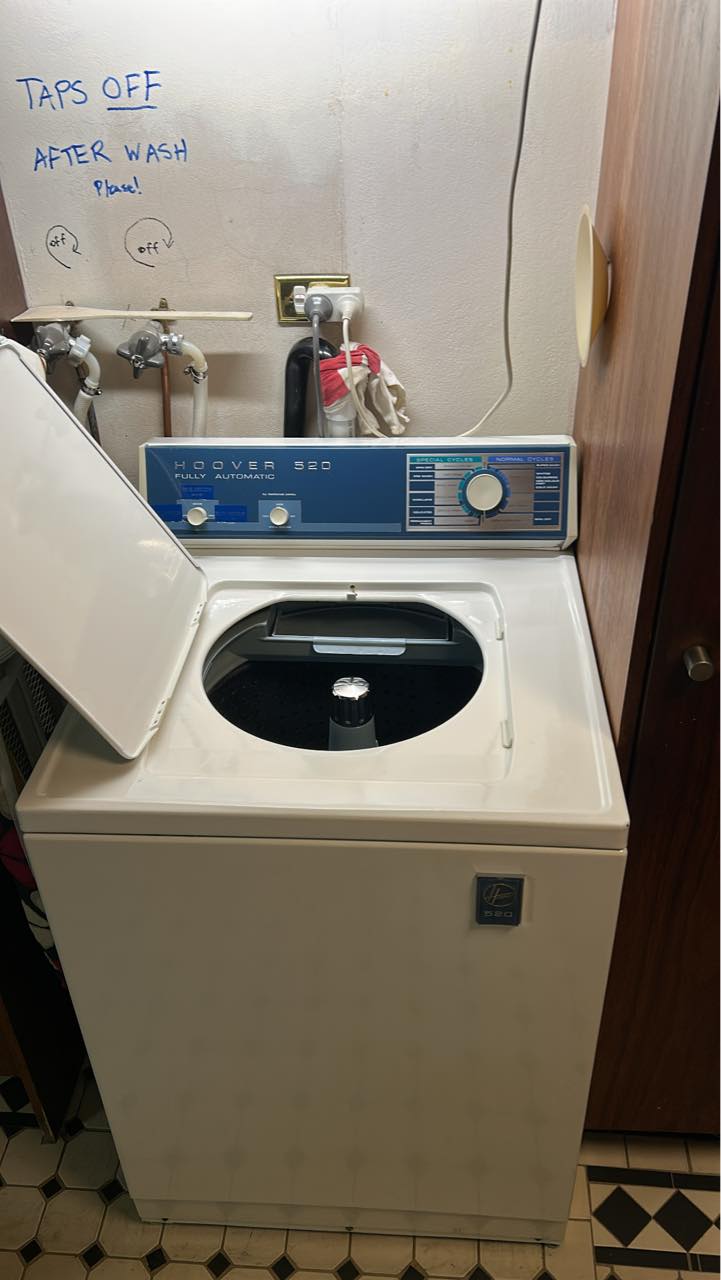
There’s something oddly comforting about stepping into a different era—especially when that era is sitting right in Grandma’s laundry room. Her 1972 washing machine, still humming faithfully after more than five decades, is proof that some things were simply built to last. No digital screens. No complicated cycles. Just sturdy buttons, a smooth dial, and that unmistakable mechanical rhythm older appliances seem to sing.
I was at her house today and ended up doing three full loads, each one feeling like a tiny trip back in time. And every time I looked at that little chrome badge proudly declaring “FULLY AUTOMATIC,” I couldn’t help but smile. Back then, that phrase was a selling point—a futuristic promise that your machine could handle everything on its own. Today, it feels charming, almost innocent, compared to the long list of sensors, modes, and Wi-Fi features modern washers brag about.
But Grandma’s old machine?
It doesn’t beep.
It doesn’t connect to an app.
It doesn’t even pretend to think for you.
It just works.
There’s a simple satisfaction in lifting that heavy lid, smelling the clean, warm laundry, and knowing that this sturdy, avocado-green relic has been doing its job longer than most people’s appliances have existed. It washed baby clothes, school uniforms, Sunday bests, and now—decades later—it’s still turning the drum and spinning out memories.
Maybe that’s why I love using it so much. It’s not just a washer. It’s a reminder of craftsmanship, of family, of a time when “fully automatic” felt like stepping into the future. And honestly? I think that old future might have been built even better than today’s.